

The Fibonacci sequence, fractal patterns, and the concept of Yin-Yang are not just abstract ideas. They are fundamental principles found in nature. They are also present in mathematics and philosophy. They shape our understanding of balance, growth, and flow. These concepts also have profound applications in martial and healing arts, guiding practitioners in their physical movements and energy work.

What is the Fibonacci Code?
The Fibonacci sequence is a mathematical pattern where each number is the sum of the two preceding ones (1, 1, 2, 3, 5, 8, 13, etc.). This sequence appears in various natural phenomena. Examples include the arrangement of leaves on a stem and the branching of trees. They also encompass the spiral shapes of shells and galaxies. The Fibonacci spiral is created by plotting arcs from the squares of Fibonacci numbers. It represents growth and expansion in a smooth, balanced manner.

What are Fractal Patterns?
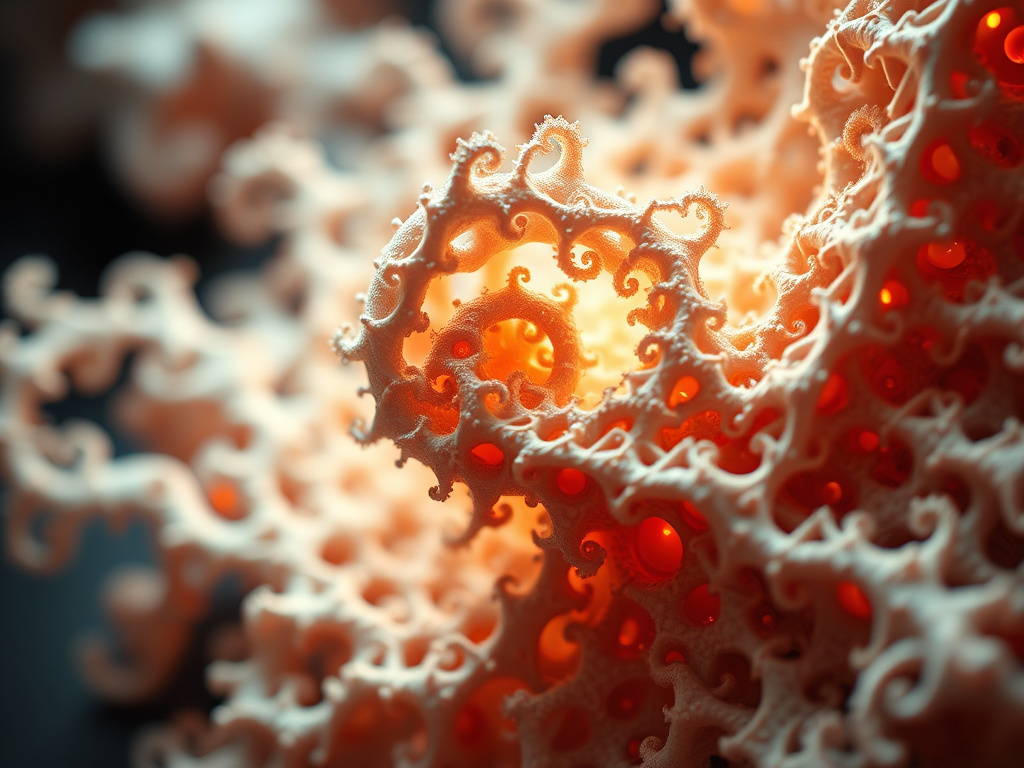
Fractals are intricate, self-repeating patterns that are found at every scale in nature. Whether you zoom in or out on a fractal, the same patterns continue to emerge. Examples of fractals include the branching of trees, the structure of snowflakes, and the patterns of river networks. Mathematically, fractals can be infinitely complex, yet they follow simple, recursive rules.
What is Yin-Yang?
Yin-Yang is a foundational concept in Chinese philosophy, representing the balance between two complementary forces. Yin is associated with qualities like softness, darkness, and passivity, while Yang represents hardness, brightness, and activity. Together, they symbolize how opposites work in harmony, constantly shifting and balancing one another. In martial arts and healing, Yin-Yang clarifies the balance between attack and defense. It also explains the balance between strength and flexibility. Furthermore, it describes the body’s internal and external energies.

The principles of the Fibonacci sequence, fractal patterns, and Yin-Yang have deep connections with martial and healing arts. These concepts influence practitioners’ understanding of body movements. They impact the perception of energy flow and balance in disciplines like Tai Chi, Qigong, and various martial arts forms.
Fibonacci Code in Martial Arts and Healing
- Natural Movement Efficiency:
- The Fibonacci sequence (1, 1, 2, 3, 5, 8…) reflects the spiral structures seen in nature (e.g., galaxies, shells). In martial arts, practitioners mimic this efficient, natural growth pattern in their movements. For example, Tai Chi incorporates spiraling motions that mirror the Fibonacci spiral, promoting fluid, energy-conserving techniques. ResearchGateResearchGate.
- Scientific Insight: Biomechanic studies suggest that spiral motions reduce joint strain and increase energy efficiency. These movements align with the body’s natural structure, optimizing the flow of force during kicks, punches, and blocksResearchGate.

Fractal Patterns in Martial Arts and Healing
- Repetition and Growth:
- Fractal patterns are self-repeating at different scales, a concept mirrored in martial arts training. Practicing the same movements repeatedly occurs in Karate kata and Kung Fu forms. This repetition builds layers of complexity. It leads to mastery. ResearchGate.
- Biological Relevance: Fractals are also found in biological systems. Examples include the branching of blood vessels or lung alveoli. These structures are supported by martial arts movements. Rhythmic, fractal-like motions in Qigong and Tai Chi improve circulation, harmonizing the body’s natural energy flow. ResearchGate.
Yin-Yang Balance in Martial Arts and Healing
- Balance of Opposites:
- Yin-Yang represents the duality of forces, such as soft vs. hard and passive vs. active. In martial arts, the transition between these forces creates dynamic movements. A powerful strike (Yang) followed by a gentle block (Yin) is a common sequence in styles like Kung Fu. ResearchGate.
- Health Applications: In Traditional Chinese Medicine (TCM), balancing Yin (cooling, restful energy) is crucial. Yang (warming, active energy) is also vital for physical health. Tai Chi, known for its slow, deliberate movements, works to balance these energies, promoting both martial efficiency and healing. ResearchGate.
Interconnectedness of the Concepts
- Fibonacci and Yin-Yang:
- The Fibonacci sequence and Yin-Yang both reflect universal principles of balance and harmony. The spiral growth of Fibonacci mirrors the alternating, cyclical energy of Yin-Yang. Both illustrate how growth and balance manifest in natural and martial systems. ResearchGate.
- Fractals and Yin-Yang:
- Fractal patterns echo the cyclical nature of Yin and Yang, where small movements repeat and grow into more complex forms. The repetition of Yin-Yang in martial arts creates balance. It refines energy. This is much like how fractals grow in complexity through repetition. ResearchGate. Just like the repetitive practice of martial arts, like Tai Chi.

Conclusion
Fibonacci spirals, fractal patterns, and the Yin-Yang concept are foundational in martial and healing arts. They provide a framework for understanding movement efficiency, energy balance, and the natural flow of life. Whether through scientific research on biomechanics or ancient philosophies, these principles guide practitioners toward health, harmony, and mastery.
These insights align with the growing body of research on natural patterns. They influence martial arts and healing. This provides a deeper understanding of their universal applications.
Discover more from Living The Lunar Calendar with Beth
Subscribe to get the latest posts sent to your email.
 Living The Lunar Calendar with Beth