
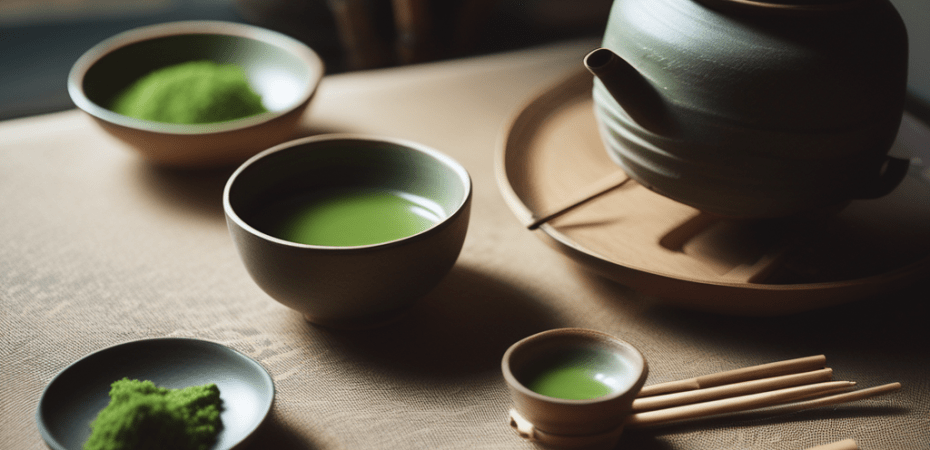
When I dove into the ancient lunar calendars, I found out that nearly every ancient culture had their own set of beliefs, rituals, and practices that revolved around the Lunar Calendar. Asian cultures are no exception. Take the Tea ceremony, also known as chanoyu (cha-no-yu), chadō (cha-dō), or simply sadō (sa-dō), for example. It’s a traditional ritual influenced by Zen Buddhism where powdered green tea, or matcha, is lovingly prepared by a skilled practitioner and served to a small group of guests. But it’s not just about tea; it’s a whole spiritual and aesthetic discipline that covers various aspects of Japanese culture, from art and architecture to philosophy and spirituality. These traditions all took inspiration from the Sun, Moon, and seasonal cycles.
The oldest records of humanity are ALL astrological. Tracking the Sun, Moon and seasons was of utmost importance. Ancient wise ones’ marked these changes with rituals like the tea ceremony.
Historical Background
The tea ceremony has its origins in China, but it was formalized in Japan during the 15th and 16th centuries by influential tea masters such as Sen no Rikyū (sen-no-ri-kyū), who emphasized simplicity, humility, and the appreciation of imperfect beauty wabi-sabi, (wa-bi-sa-bi). Rikyū’s principles laid the foundation for what is now recognized as the traditional Japanese Tea Ceremony.
Key Elements*
- TYPE OF CEREMONY: Chaji or Chakai:
- Chaji (cha-ji): A formal tea gathering that typically lasts about four hours and includes a full-course kaiseki (kai-se-ki) meal followed by the serving of thick tea koicha, (koi-cha) and thin tea usucha, (usu-cha).
- Chakai (cha-kai): A shorter and more casual version, focusing mainly on the preparation and serving of tea and sweets.
- ENVIRONMENT: The Tea Room (Chashitsu):
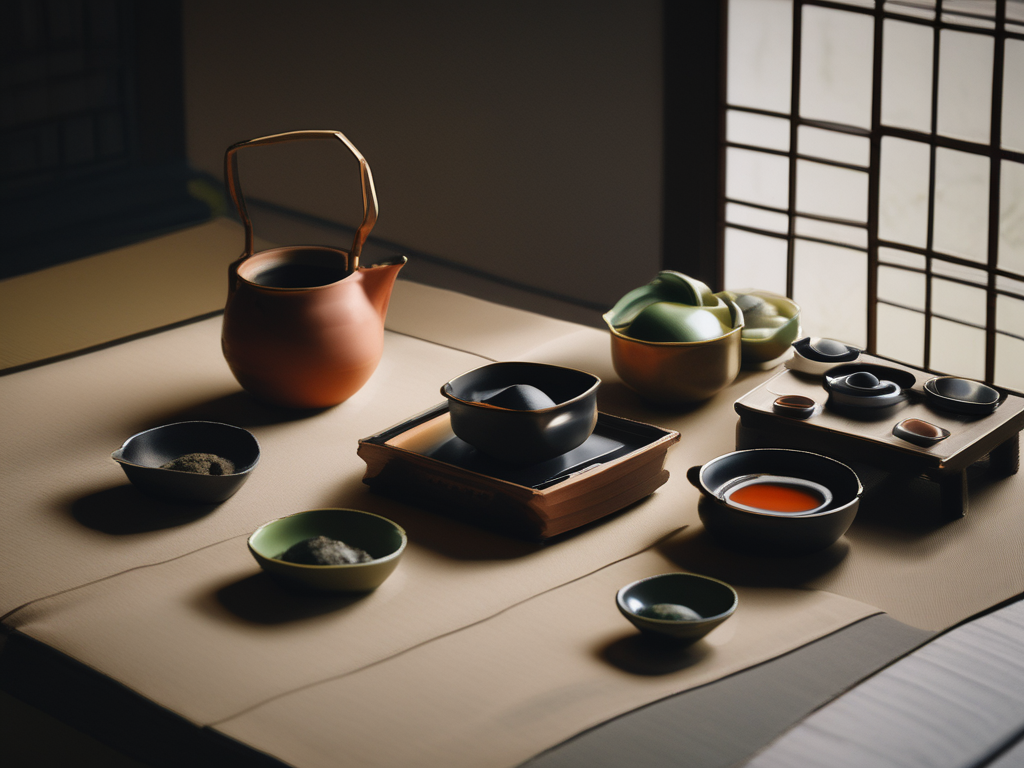
- Chashitsu (cha-shi-tsu): A specially designed space, often small and simple, embodying the principles of wabi-sabi. Traditional tea rooms feature tatami (ta-ta-mi) mats, sliding doors, a low entrance called nijiriguchi (ni-ji-ri-gu-chi), and a tokonoma (to-ko-no-ma) for displaying a scroll or flower arrangement.
- The Tea Utensils (Chadogu):
- Chawan (cha-wan): Used for mixing and drinking the tea.
- Chasen (cha-sen): For whisking the matcha.
- Chashaku (cha-sha-ku): For measuring the matcha powder.
- Natsume (na-tsu-me) or Chaire (cha-i-re): For storing matcha powder.
- Kama (ka-ma): Kettle for boiling water.
- Furo (fu-ro): Brazier for heating the kettle.
- Hishaku (hi-sha-ku): Ladle for transferring water from the kettle to the tea bowl.
The Procedure
- Preparation:
- The host meticulously cleans and arranges the tea utensils. The guests wait in a separate room until they are invited into the tea room.
- Greeting:
- Guests enter the tea room through the low entrance, nijiriguchi, bowing to show humility. They admire the tokonoma, appreciating the scroll and flower arrangement.
- Purification:
- The host purifies each utensil with ritualistic movements, emphasizing mindfulness and respect.
- Making the Tea:
- The host scoops matcha into the chawan, adds hot water from the kama with the hishaku, and uses the chasen to whisk the tea into a frothy consistency.
- Serving the Tea:
- The host serves the prepared matcha to the main guest, who admires the bowl, rotates it, and drinks the tea in several sips. (May want to use different cups for everyone or wipe with decorative sanitizer, lol – but traditionally you’re supposed to trust you won’t get sick in a ritual like this). The bowl is then passed to the other guests, who repeat the process.
- Closing:
- The host cleans the utensils again, and the guests express their appreciation for the ceremony.

Cultural Significance
The Japanese tea ceremony is a practice of mindfulness, focusing on the present moment and the beauty in simplicity and imperfection. It promotes harmony (wa, 和), respect (kei, 敬), purity (sei, 清), and tranquility (jaku, 寂).
Here’s a blog about traditional foods with recipes to serve with your tea. Also, here’s a listings of teas to use during different phases of the Lunar Calendar, and Seasonal cycles.
Since we’re all living by the Lunar calendar cough cough, plan a tea ceremony for diversity or as a practice of mindfulness and meditation. Invite a friend. It will be fun!!
*AI research, translation and pronunciation assist
Discover more from Living The Lunar Calendar with Beth
Subscribe to get the latest posts sent to your email.
 Living The Lunar Calendar with Beth